.jpg)

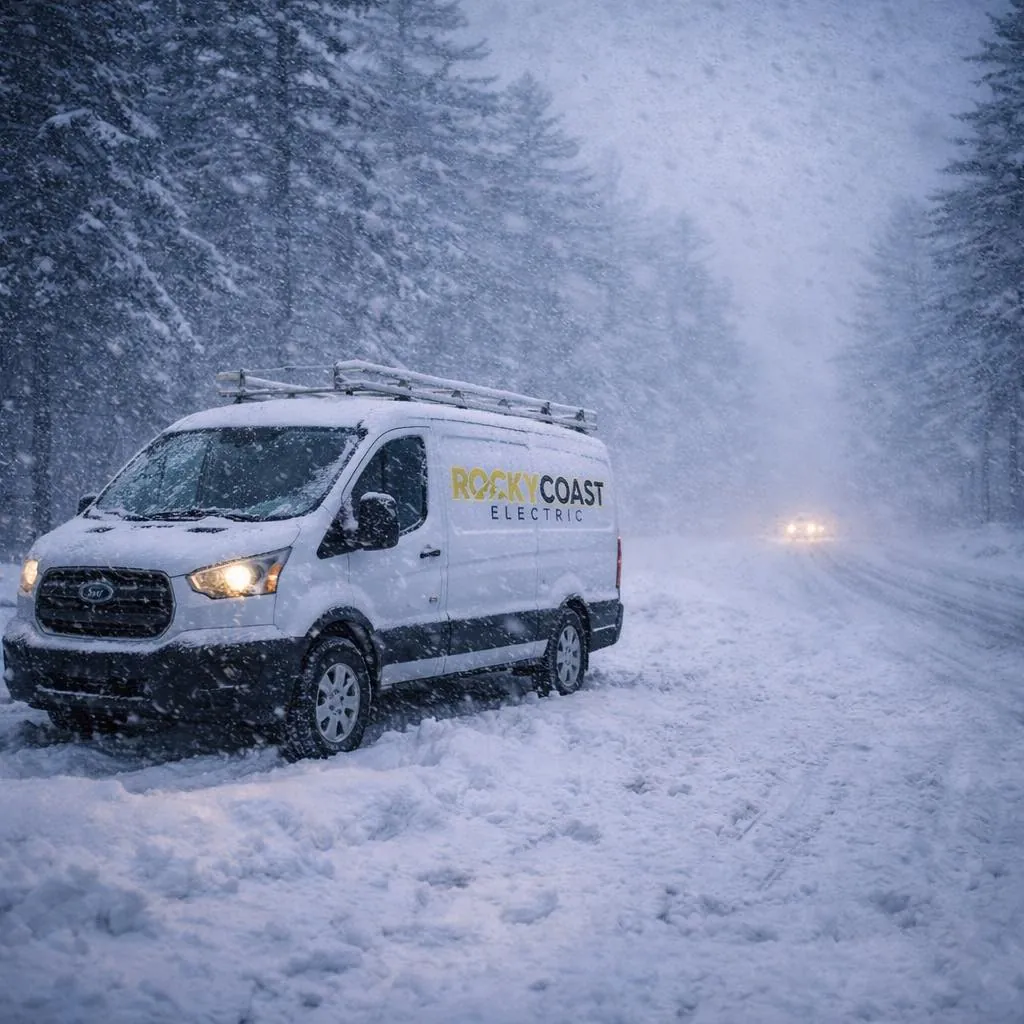
If you've ever sat in a dark house waiting for Central Maine Power to restore service after a nor'easter, you already know what it costs to be unprepared. Spoiled food. A freezing home. A sump pump that quits at the worst possible moment. And no real say in when the lights come back on.
At Rocky Coast Electric, we help Auburn homeowners put that frustration behind them with generator installation done right the first time. A properly sized and properly installed standby or portable generator means the next outage passes without turning your week upside down.
Types of Generator Systems We Install
Rocky Coast Electric installs a range of backup power setups to match your home's needs, budget, and how much interruption you're willing to live with when the grid goes down.

Standby Generators (Automatic Whole-Home Power)
A standby generator sits permanently outside your home, wired in and connected to your natural gas or propane supply. When utility power fails, the automatic transfer switch detects the outage and starts the generator within seconds. Nothing for you to do. Standby units range from around 10 kW for critical-circuit coverage up to 22 kW or more for whole-home power. They self-test weekly and are built to run continuously through long outages.
Portable Generator Transfer Switch Installations
If you already own a portable generator or want a lower upfront cost, we can install a manual transfer switch or generator inlet box that lets you safely connect your portable unit to your home's wiring. This puts an end to the dangerous habit of back-feeding power through extension cords and gets the power where it actually needs to go.
Critical-Circuit vs. Whole-Home Coverage
Not every homeowner needs every outlet running during an outage. A critical-circuit installation dedicates generator capacity to your furnace, refrigerator, sump pump, and a few lighting circuits — your family stays safe and comfortable at a lower equipment cost. Whole-home coverage keeps everything running, including central air, electric ranges, and shop equipment. We'll walk through both options honestly during your free estimate and help you decide what actually makes sense for your home — not what costs the most.
Why Backup Power Matters for Auburn Homeowners
Maine weather is beautiful and unforgiving in roughly equal measure. Ice storms, high winds, and heavy snow regularly cause outages that stretch from hours into days, and Auburn's mix of rural roads and aging utility lines means restoration times aren't always predictable. Add in growing grid reliability concerns and the number of homes that now depend on electricity for medical equipment, and backup power has gone from a nice-to-have to a real part of self-sufficient home planning.
Here's what's actually on the line during a multi-day outage:
- Heating systems — oil, propane, and heat pump equipment all need electricity to run their controls, fans, and pumps.
- Sump pumps stop, leaving basements exposed during rain or snowmelt.
- Refrigerators and freezers can start losing food within about four hours.
- Home medical equipment — oxygen concentrators, CPAP machines, infusion pumps — can't wait for utility crews.
- Remote work and home-based businesses lose productivity and connectivity with every outage.
How to Calculate What Generator Size You Need
Sizing is one of the most important decisions in the whole project. Undersize the generator and it trips under load. Oversize it and you waste fuel and risk wet-stacking on propane or natural gas units. Here's how we approach sizing for Auburn homes:
List the loads you want to power. Identify every appliance and circuit you want the generator to support. Each load has both a running wattage and a startup (surge) wattage — motors pull significantly more power to start than to run.
Calculate total running watts. Add up the running wattages of everything you expect to run at the same time. A 1,200-watt furnace blower, 700-watt refrigerator, 1,000-watt sump pump, and basic lighting might total around 3,500 running watts.
Account for the largest startup surge. Find the load with the highest startup wattage — usually an air conditioner, well pump, or sump pump. Add that surge to your running total to get your minimum generator capacity.
Apply the 80% rule. Size the generator so your expected load doesn't exceed 80 percent of its rated output. This is the standard best practice for both safety and equipment longevity (more on this below).
As a rough guide: a 10 kW generator comfortably covers critical circuits in most Maine homes; 14 to 16 kW handles most of a mid-size home including central air; and 20 to 22 kW is appropriate for larger homes with electric ranges, well pumps, or multiple HVAC zones. We run a detailed load calculation for every installation so the generator is actually matched to your home, not guessed at.
Understanding the 80% Rule and the 20/20/20 Rule for Generators
What Is the 80% Rule for Generators?
The 80% rule says you should never run a generator at more than 80 percent of its rated capacity on a continuous basis. Two reasons: safety and longevity. Generators running at or above full rated load generate excess heat, wear down engine components faster, and are more prone to nuisance shutdowns. Keeping the load at 80 percent or below leaves headroom for startup surges, reduces thermal stress on the alternator windings, and stretches the service life of the equipment.
In practice: if a generator is rated at 10,000 watts (10 kW), plan your load to stay under 8,000 watts sustained. We build that margin into every sizing recommendation.
What Is the 20/20/20 Rule for Generators?
The 20/20/20 rule is a maintenance guideline used across the generator industry. It says a generator should be run at no less than 20 percent of its rated load, for at least 20 minutes, at least once every 20 days. Running a generator at very light loads or letting it sit for extended periods lets moisture build up in the engine oil, causes carbon buildup on the cylinder walls, and can lead to fuel system issues in gasoline-powered units. Standby generators handle this automatically through their weekly exercise cycle, which runs the unit under a light load to keep things lubricated and ready.
What Is the Lifespan of a Generator?
A standby generator that's properly installed, correctly sized, and regularly maintained will typically last 20 to 30 years, or 10,000 to 30,000 operating hours, depending on the brand and engine type. Portable generators have shorter lives because of their open-frame construction and less robust engines — most last 1,000 to 2,000 hours with proper care.
What most affects generator lifespan:
- Correct sizing. A generator that chronically runs near its rated capacity wears out significantly faster than one with adequate headroom.
- Oil and filter changes. Engine oil should be changed after the first 20 to 25 hours of break-in and then annually for standby units, or every 50 to 100 hours for heavily used equipment.
- Fuel quality. Natural gas and propane standby units avoid the fuel degradation issues that plague gasoline units, which is a big reason they last longer.
- Professional installation. Improper wiring, inadequate ventilation, or wrong fuel connections shorten the equipment's life and create safety hazards. This is the part you can't shortcut — what's behind the wall matters as much as what's in front of it.
Our Generator Installation Process
We've kept the process thorough, transparent, and as easy on your daily routine as we can make it. Here's what to expect:
Free in-home assessment and load calculation. We come out, look at your electrical panel, walk through your critical loads, and recommend a generator that's correctly sized for your home and budget.
Permitting. Generator installations require electrical permits in the City of Auburn. We handle all permit applications and schedule the inspections.
Equipment placement. We site the generator according to local code requirements for clearance from windows, doors, and combustibles, and we coordinate the fuel line connection with your propane or natural gas provider.
Transfer switch installation. Our licensed electricians install and wire the automatic or manual transfer switch at your main panel, ensuring safe isolation from the utility grid.
Load testing and commissioning. Before we leave, we test the generator under load, verify the transfer switch operates correctly, and confirm every critical circuit is powered like it should be.
Homeowner walkthrough. We walk you through the control panel, explain the exercise cycle, and answer every question you have about running and maintaining the system.
Why Auburn Homeowners Trust Rocky Coast Electric
Generator installation isn't a job for an unlicensed handyman or a general contractor subbing out the electrical. The transfer switch ties directly into your main electrical panel — the most critical and potentially dangerous part of your home's electrical system. Mistakes here can damage your generator, destroy appliances, or create shock hazards for the utility crews working to bring power back to your neighborhood.
Here's what working with a licensed electrical company means in practice:
- Licensed and insured. All electrical work is performed by Maine-licensed electricians and meets current NEC and local code requirements.
- Panel expertise. We identify and address any existing panel issues — outdated wiring, insufficient capacity, code deficiencies — before they become a problem with your new generator.
- Honest recommendations. We won't sell you a bigger generator than your home needs. The sizing comes from your actual load calculation, not a target.
- Local team. Rocky Coast Electric is based in Sabattus and has been working in Androscoggin County for years. When you call, you reach a local crew that knows the area.
- Transparent pricing. You get a detailed written estimate before any work starts. No surprises on installation day, no hidden fees after the permit is pulled.
Serving Auburn, Lewiston, and Androscoggin County
Rocky Coast Electric is based in Sabattus and provides generator installation, transfer switch installation, and electrical panel upgrades across Androscoggin County, including Auburn, Lewiston, Greene, Minot, Poland, Turner, Lisbon Falls, and the surrounding towns. Whether you're in the heart of Auburn or on a country road outside of town, the same crew brings the same work to every job.
Frequently Asked Questions
A standard standby generator installation typically takes one to two days for the electrical work, not counting the time needed for the gas utility or propane supplier to complete the fuel line connection. We coordinate the trades and keep you in the loop on timing throughout the project.
Yes. Generator installations require an electrical permit, and in most cases a separate plumbing or mechanical permit for the gas line. We handle all the permit paperwork and schedule the inspections so the install is fully code compliant.
Natural gas is the most convenient option if your home has a gas service connection — it gives you an uninterruptible fuel supply. Propane is a strong alternative if you don't have natural gas access; a properly sized tank can run a generator for several days. We work with both and can help you think through storage and delivery for propane setups.
Maine law requires the electrical connection of a generator — specifically the transfer switch wiring to the main panel — to be performed by a licensed electrician. Attempting this work without a license is illegal, won't pass inspection, and creates serious safety risks. The generator unit itself can be placed on its pad by the homeowner, but all wiring and fuel connections need to go to licensed professionals.
Most manufacturers and local codes require a standby generator to be placed at least 18 inches from the home's exterior wall and at least five feet from any window, door, or fresh-air intake. The unit also needs to be positioned so exhaust doesn't point toward any opening in the home. We go over all the placement requirements with you during the initial assessment.
Yes. A permanently installed standby generator is a recognized home improvement that appeals to buyers, particularly in a market like Maine where outages are a regular concern. A whole-home standby installation can add meaningful resale value while doing its real job of keeping your family covered when the power goes out.
Ready to Talk About Backup Power?
Every winter storm that knocks out power in Auburn is a reminder of what's at stake when your home doesn't have a backup plan. A properly installed standby generator keeps your family warm, your sump pump running, and your daily life moving — no matter what the weather does.
Call Rocky Coast Electric or visit our contact page to schedule a free in-home generator assessment. We'll walk your home, run the load calculation, and give you a clear, no-pressure estimate so you can make a confident decision in your own time.